 India's No.1 PU & Degree With Integrated IAS & IPS(UPSC/PSC) Training College.


Daily Current Affairs Digest | 22nd May 2026
Daily Current Affairs Digest | 22nd May 2026
1. IN-SPACe Offers PSLV Technology Transfer to Private Industry
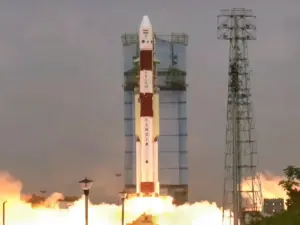
India’s space sector has taken another major step towards private participation. IN-SPACe has offered full technology transfer of the Polar Satellite Launch Vehicle to eligible Indian private industries. This move can help private companies manufacture, integrate and commercialise PSLV-class launch services.
For UPSC, this development is important under GS Paper III: Science and Technology, Space Technology, Indigenisation and Infrastructure.
Key Prelims Points
IN-SPACe stands for Indian National Space Promotion and Authorisation Centre. It promotes, authorises and supervises private sector participation in India’s space activities. PSLV is known as the workhorse launch vehicle of India. NSIL is the commercial arm under the Department of Space.
Mains Relevance
This reform shows India’s shift from a state-led space programme to a market-enabled space economy. It supports Atmanirbhar Bharat, creates high-value aerospace jobs and allows ISRO to focus on advanced missions such as Gaganyaan, reusable launch vehicles and planetary exploration.
2. Chenab River Projects and the Indus Waters Treaty
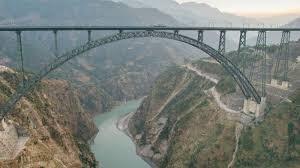
India is moving ahead with major Chenab river-linked projects worth around ₹2,600 crore, including the Chenab-Beas Link Tunnel and a sediment-bypass tunnel at the Salal Dam. The development is significant because Chenab is one of the Western Rivers under the Indus Waters Treaty.
For UPSC, this topic is important under GS Paper II: India and its Neighbourhood, GS Paper I: Indian River Systems, and GS Paper III: Energy and Infrastructure.
 Key Prelims Points
The Indus Waters Treaty was signed in 1960 between India and Pakistan. The Eastern Rivers — Ravi, Beas and Sutlej — are allocated for India’s unrestricted use. The Western Rivers — Indus, Jhelum and Chenab — are mainly allocated to Pakistan, but India has limited rights for domestic use, agriculture and run-of-the-river hydropower projects.
Mains Relevance
The Chenab projects highlight the link between water security, hydropower, climate change and strategic diplomacy. India must fully utilise its treaty-permitted rights while ensuring ecological safety, disaster-resilient design and technical transparency.
3. RAINMUMBAI: India’s First Exchange-Traded Weather Derivative
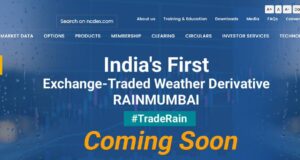
NCDEX has introduced RAINMUMBAI, India’s first SEBI-approved exchange-traded weather derivative contract. It is a cash-settled futures contract linked to Mumbai’s monsoon rainfall.
For UPSC, this topic is important under GS Paper III: Economy, Agriculture, Disaster Management, Climate Change and Financial Markets.
 Key Prelims Points
A derivative is a financial contract whose value is derived from an underlying asset or variable. A weather derivative is linked to weather variables such as rainfall or temperature. RAINMUMBAI is linked to Mumbai monsoon rainfall and is cash-settled.
Mains Relevance
This development shows how climate risk is becoming financial risk. Weather derivatives can help businesses hedge against rainfall-related losses. However, such instruments require strong regulation, transparent weather data and proper investor awareness.
4. India Raises Concerns at WTO Against UK Steel Safeguards
India and several other countries have raised concerns at the WTO over the United Kingdom’s steel safeguard measures. The UK’s revised regime involves stricter tariff-rate quotas and high duties on steel imports above quota levels.
For UPSC, this is relevant under GS Paper II: International Institutions and GS Paper III: Economy, External Sector, Trade and Industry.
 Key Prelims Points
Safeguard measures are emergency trade restrictions used against sudden import surges. A tariff-rate quota allows imports up to a specific quantity at a lower tariff, while imports beyond that quota face a higher tariff. Anti-dumping duty deals with unfair pricing, while countervailing duty offsets unfair subsidies.
Mains Relevance
The issue reflects the growing tension between free trade and protectionism. While countries negotiate free trade agreements, they continue to protect sensitive sectors such as steel. India must use WTO mechanisms, diversify export markets and strengthen its green steel capacity.
5. India-Africa Forum Summit Postponed Due to Ebola Outbreak
The Fourth India-Africa Forum Summit, scheduled in New Delhi, has been postponed due to the Ebola outbreak situation in parts of Africa, especially the Democratic Republic of Congo and Uganda.
For UPSC, this topic is relevant under GS Paper II: International Relations and Global Institutions and GS Paper III: Health Security and Biosecurity.
 Key Prelims Points
Ebola Virus Disease is a severe zoonotic disease. It belongs to the Filoviridae family. Fruit bats are considered natural hosts. WHO can declare a Public Health Emergency of International Concern under the International Health Regulations, 2005.
Mains Relevance
The postponement shows that health security has become a major part of foreign policy. India can strengthen India-Africa cooperation through affordable medicines, vaccines, telemedicine, digital health systems, disease surveillance and capacity building.




